
The Problem With IDENTITY POLITICS—Including GENDER IDENTITY

Someone wrote me:
What’s wrong with identity politics? Why do you care? If people have the rights of a free citizen they are entitled to think they are whatever gender they want. You are actively suppressing others’ freedoms with your delicate sensibilities!
It is true that individuals have the freedom to create their own realities, and not just in America, but anywhere on earth, even in a prison cell. It’s a coping mechanism that can help people endure various circumstances.
In one sense, I don’t care what personal realities people create, unless it’s harmful to society one way or another. On the other hand, I care in cases where mental illness is involved because I hate psychological disorders and the sufferings thereof. I want to see people delivered and not in bondage, whatever form that may take.
As far as gender goes, it’s simple: Look down at your crotch and it reveals all. To deny obvious physical reality and DNA is mental illness, not something to be encouraged and embraced by our learning institutions and governing authorities. For instance, a proposed law in Vermont would make taxpayers fund children’s “sex change” surgeries; you can read about it here. When taxpayers are forced to finance the absurdities of a person’s neurosis it ceases to be an individual issue.
Yet we live in a free society, so if an individual is intent on having his/her genitals mutilated in order to (supposedly) become a different gender, that’s their prerogative. While I’m against the practice for obvious reasons, what these people do with their money and time is their business. The problem arises when citizens are forced to finance and even celebrate such misguided endeavors.
Another issue surfaces when citizens are required to refer to an obvious dude with feminine pronouns at the threat of committing a “hate crime.” Not to mention Lib “leaders” mandating free citizens to do things that go against their consciences, like penalizing bakers, photographers and t-shirt makers who refuse to perform certain jobs for legitimate religious reasons. Keep in mind that there are plenty of bakers, photographers and t-shirt designers out there who would love to take people’s money and perform the task in question.
Needless to say, when loony Lib identity politics are preached at our learning institutions as legitimate attitudes/lifestyles it negatively influences our kids, grandkids, their friends & our neighbors. In other words, this kind of lunacy can really screw them up, mentally & spiritually, with the corresponding societal domino effect.
Consider a man who claims to be “transfinancial,” which means a rich person trapped in a poor person’s body. Should taxpayers foot the bill so he can live according to his delusion? Should we purchase him a mansion, an expensive sports car and a yacht? Would it be a “hate crime” if you refused to give him money or address him as Lord Beasley?
While that is an amusing mock example, it’s zeros-in on the problem with identity politics in general. It punishes innocent people and forces them to assist in the delusions of mentally ill individuals. Or, just as bad, it compels honest folks to support the scam of those who use identity politics for personal gain. Fauxcahontas Warren is a good example of the latter. She used trace amounts of AmerIndian DNA to claim minority status and boost her career at Harvard and in politics. She’s 1/1024 Cherokee, by the way, less than the average American.
So identity politics are far from an individual issue. There are many legit reasons why citizens who aren’t perverse LIEberals should care and reject this kind of social insanity. They’re not “bigots” — as loony Lefties are prone to slander — they simply have common sense in regards to obvious reality (the way it really is).
Related Topics:
Homosexuality is a Sin, BUT there’s Freedom through Christ
Demonic Spirits — How to Deflect Them
Is Name-Calling Ever Appropriate?
(Pseudo) SCIENCE Is the “New God” and Dubious SCIENTISTS Are the “New Gods”
Understanding the Religion of LIEberalism
Are Homosexuals “Born that Way”?
What Does DO NOT GO BEYOND WHAT IS WRITTEN Mean in 1 Corinthians 4:6?

Let’s read the verse in question along with the surrounding text:
This, then, is how you ought to regard us: as servants of Christ and as those entrusted with the mysteries God has revealed. 2 Now it is required that those who have been given a trust must prove faithful. 3 I care very little if I am judged by you or by any human court; indeed, I do not even judge myself. 4 My conscience is clear, but that does not make me innocent. It is the Lord who judges me. 5 Therefore judge nothing before the appointed time; wait until the Lord comes. He will bring to light what is hidden in darkness and will expose the motives of the heart. At that time each will receive their praise from God.
6 Now, brothers and sisters, I have applied these things to myself and Apollos for your benefit, so that you may learn from us the meaning of the saying, “Do not go beyond what is written.” Then you will not be puffed up in being a follower of one of us over against the other.
1 Corinthians 4:1-6
The phrase “Do not go beyond what is written” appears in the text in a curious manner and so a little confusion in interpretation is understandable. This explains the Quest Study Bible’s carefully worded commentary:
The meaning of this phrase has long been debated. It probably refers to Scripture… Paul saw that wisdom and inspiration came from God.
In The MacArthur Study Bible brother John is more certain concerning the meaning of “what is written”:
God’s faithful servants are to be treated with respect only within the bounds of what is scriptural.
“what is written” refers to the God-breathed Scriptures in view of the immediate context and the context of the New Testament. Let me explain…
In verse 1 Paul describes himself & his team (e.g. Apollos) as “servants of Christ… those entrusted with the mysteries God has revealed,” which is a reference to the mystery of God detailed elsewhere in Scripture (Ephesians 3:1-12 & Colossians 1:27, 2:2-3). In short, the mystery of God is Jesus Christ and everything surrounding his awesome message, which is the gospel or “good news.” It’s “Christ in you, the hope of glory” (Colossians 1:27).
Paul shared this message with the Bereans and they “examined the Scriptures every day to see if what Paul said was true,” which is one of the reasons they’re hailed as being “of more noble character” (Acts 17:10-12). This is a scriptural example of people following Paul & Apollos’ ministerial standard cited in 1 Corinthians 4:6—to not go beyond what is written. Scripture interprets Scripture.
Furthermore, the idea that “what is written” refers to the God-breathed Scriptures is the most obvious answer in light of other plain passages by Paul (2 Timothy 2:15 & 3:16-17). After all, what else could “what is written” legitimately refer to? If the plain sense makes sense don’t look for any other sense (lest you end up with nonsense).
Also, verse 2 says: “it is required that those who have been given a trust must prove faithful.” Who is it that has “been given a trust”? Answer: Fivefold ministers in the body of Christ who are responsible for teaching & preaching God’s Word (Ephesians 4:11-13, James 3:1 & 1 Timothy 5:17). Inspired by the Holy Spirit, Paul insists that such ministers “must prove faithful.” Faithful to what? Faithful to the Holy Scriptures—God’s blueprint for authentic Christianity!
Consider the set-up of 1 Corinthians 4:1-6: In chapter 3 Paul addresses the issue of the various teachers at the Corinth fellowship and how some believers were picking favorite minsters, which was causing division as believers were developing little sects based around their favorite teachers. This segues into chapter 4 and Paul & Apollos’ ministerial guideline: Whoever you’re receiving from in ministry the rule stands: “Do not go beyond what is written,” which includes people like Paul who claim to be entrusted with “the mysteries God has revealed.” Paul appropriately applied this wise guideline to his own ministry.
It’s imperative for believers to understand that it’s not the human vessel and the charismatic disposition thereof that matters, but rather that which they teach (and live) that corresponds to the rightly divided Word of God, which is why Paul concludes with “then you will not take pride in one man (teacher) over another” (which is how the original NIV phrases the end of verse 6). In short, we should be looking to the authentic Word of God being conveyed through the flawed human vessel in question and not the individual, who’s merely a servant of Christ.
No matter how great a minister/ministry/movement/sect is in the body of Christ, we must focus on the properly-handled Holy Scriptures to determine doctrine and practice. This is the principle of sola scriptura, which is Latin for “by Scripture alone”—the idea that the God-breathed Scriptures are the sole source of authority for Christian faith and practice.
Related Topics:
Hermeneutics — Proper Bible Interpretation
Berean Spirit — What is it? How Do You Cultivate It?
Who Wrote the New Testament Books? Who Authorized them as Scripture Canon?
Bible—Is it Full of Contradictions? Does it Promote Slavery, Tyranny and Discrimination?
Sectarianism — What is It? What’s Wrong with It?
What Is KJV ONLY? What’s Wrong With It?
KINGDOM OF GOD — What Does It Mean?

The “kingdom of God” literally refers to the rule of the LORD or spiritual reign of God.
The kingdom of God is essentially synonymous with the Church (Matthew 16:18-19), but only if “kingdom of God” is defined in a narrow sense, as in “a spiritual rule over the hearts and lives of those who willingly submit to God’s authority during this present age.”
Those who rebel against God’s authority and refuse to submit to Him are obviously not part of the kingdom of God (“the kingdom of God” being the Church in this current era). By contrast, those who acknowledge the lordship of Christ and gladly surrender to God’s rule in their hearts are part of the kingdom of God and therefore part of the Church.
This, of course, is separate from belonging to a particular sect of Christianity. In other words, all genuine believers are part of Christ’s Church — and therefore part of the kingdom of God — regardless of whether or not they function in this or that sect. While there’s the one true Church — which is the kingdom of God in this age of grace — there is no “one true sect,” regardless of what sectarian people may sincerely claim.
The Kingdom of God will reign to a large degree in this fallen universe during the millennial reign of Christ (when the devil & his filthy spirits are locked up in the Abyss) and over all physical creation in the eternal age of the new heavens and new earth (2 Peter 3:13 & Matthew 26:29).
For details see this article.
Related Topics:
Being an Heir to the Kingdom of God, Inheriting It and Seeing It
What Was PAUL’S THORN?

What was “Paul’s thorn”? Who gave it to him and why? Let’s read the passage:
To keep me from becoming conceited because of these surpassingly great revelations there was given me a thorn in my flesh, a messenger of Satan, to torment me. 8 Three times I pleaded with the Lord to take it away from me. 9 But he said to me, “My grace is sufficient for you, for my power is made perfect in weakness.” Therefore I will boast all the more gladly about my weaknesses, so that Christ’s power may rest on me. 10 That is why, for Christ’s sake, I delight in weaknesses, in insults, in hardships, in persecutions, in difficulties. For when I am weak, then I am strong.
2 Corinthians 12:7-10
As you can see, Paul’s “thorn in the flesh” was a “messenger of Satan” whose purpose was to torment him. In today’s vernacular this “thorn” could be described as a pain in the neck or pain in the butt. Why was he given this thorn? The answer is plainly stated in verse 7: To keep Paul from becoming conceited because of the many great revelations imparted to him. You see, apart from the Gospels and Acts, the New Testament is comprised entirely of epistles or letters and Paul wrote the majority of them. In other words, Paul was graced with more revelation than any other New Testament figure after Jesus Christ himself. Consequently, he was given a ‘pain in the neck’ to keep him from becoming arrogant.
For reasons that escape me there’s been quite a bit of controversy over what exactly Paul’s “thorn in the flesh” was, some speculating that it was an eye disease, malaria or epilepsy. But such speculations are unnecessary since the text itself tells us precisely what it was — “a messenger of Satan” to torment Paul. Is that not clear enough? “Messenger” in the Greek is angelos, which literally refers to a messenger or ‘angel.’ Hence, Paul’s pain in the neck was a wicked angel of Satan sent to torment him. This was an unclean spirit that stirred up persecution and hardship for Paul wherever he went.
This makes perfect sense seeing as how Paul just finished listing the many great sufferings he experienced during his missionary journeys, including prison time, flogging, life-threatening occasions, scourged with 39 lashes five times, beaten with rods, stoned & presumed dead, thrice shipwrecked, adrift in the open sea, sleepless nights, hunger, thirst, lack of proper clothing, being out in the cold and escaping life-threatening persecution in Damascus in a basket let out through a window in the city wall (2 Corinthians 11:23-33).
Paul understood that the root source of these tribulations as he ministered from region to region was spiritual in nature — an unclean spirit sent by Satan — and he therefore prayed three times for the Lord to remove it, as shown in verse 12:8 (cited above). But the Lord essentially said ‘no’ and that His grace (favor) was enough for him because God’s power is perfected in human weakness rather than arrogance. This explains why Paul went on to “delight” in his weaknesses, persecutions and hardships because such things “keep [him] from becoming conceited.” This brings to mind a notable passage:
“God opposes the proud but gives grace to the humble.”
James 4:6 & 1 Peter 5:5
Since James and Peter were quoting Proverbs 3:34 this passage appears no less than three times in Scripture. Do you think the LORD is trying to tell us something? God refuses to give his favor to the arrogant; instead he actively opposes or resists them. He only gives his favor to the humble, which is why he declares in Isaiah 66:2, “ ‘This is the one I esteem: he who is humble and contrite in spirit and trembles at my word.’ ” Consequently, God is very interested in you & me developing and maintaining a humble spirit, which means we don’t think we’re all that and a bag of chips. Of course this is hard to do when you’ve been granted such great revelations and visions as Paul was given, not to mention the many awesome miracles & healings that came through his ministry; heck, even handkerchiefs that Paul touched were taken to the sick and demon-possessed, and they were healed or delivered (Acts 19:12)!
So Paul’s “thorn” was an evil spirit from Satan sent to hassle him with hardships & persecutions wherever he went on his missionary travels, which was allowed by the LORD to keep Paul from becoming arrogant.
Yet, it should be added, that Paul wasn’t a glutton for suffering since he knew the source of his many travails – an angel of Satan sent to torment him – and he prayed multiple times for the Lord to deliver him from this wicked harassing spirit. You see, Paul wasn’t some daft masochist lusting for suffering. On the contrary, he passionately sought deliverance. And even after realizing that the Lord was allowing the angel to stir up problems to keep him from becoming arrogant, he still didn’t submit to the sufferings in the absolute sense. In other words, yes, he realized that these sufferings were being allowed by God to keep him humble, and therefore delighted in them for that reason, but even then he did what he could to escape the travails. A good example is when he averted flogging by insisting upon his legal rights as a Roman citizen (Acts 22:22-29).
Related Topics:
Spiritual Warfare — Do You know What You’re Fighting For?
Spiritual Warfare — The Basics
Evil Spirits (Demons) — What Are They? What’s Their Purpose?
What Are THE BASICS of Christianity?
Is NAME-CALLING Ever Appropriate?

What does the Bible say about name-calling, especially the New Testament? Is it ever appropriate? And, if so, what are the wise guidelines.
While some believers think that name-calling is inherently mean-spirited and never appropriate, there are examples of righteous name-calling in the Scriptures. For instance, notice what John the Baptist called the corrupt religious leaders of Judea when he was baptizing at the Jordan River:
But when he saw many of the Pharisees and Sadducees coming to where he was baptizing, he said to them: “You brood of vipers! Who warned you to flee from the coming wrath? 8 Produce fruit in keeping with repentance. 9 And do not think you can say to yourselves, ‘We have Abraham as our father.’ I tell you that out of these stones God can raise up children for Abraham. 10 The ax is already at the root of the trees, and every tree that does not produce good fruit will be cut down and thrown into the fire.
Matthew 3:7-10
As you can see, John called these Pharisees and Sadducees “brood of vipers,” which means offspring of snakes! Keep in mind that the Lord later praised John’s greatness with no criticism of his righteous name-calling (Luke 7:28).
Jesus Righteously Called People Names on Appropriate Occasions
If you think what John said was radical notice what Christ called similar religious leaders in a single rant:
13 “Woe to you, teachers of the law and Pharisees, you hypocrites! You shut the door of the kingdom of heaven in people’s faces. You yourselves do not enter, nor will you let those enter who are trying to.
15 “Woe to you, teachers of the law and Pharisees, you hypocrites! You travel over land and sea to win a single convert, and when you have succeeded, you make them twice as much a child of hell as you are.
16 “Woe to you, blind guides! You say, ‘If anyone swears by the temple, it means nothing; but anyone who swears by the gold of the temple is bound by that oath.’ 17 You blind fools! Which is greater: the gold, or the temple that makes the gold sacred? 18 You also say, ‘If anyone swears by the altar, it means nothing; but anyone who swears by the gift on the altar is bound by that oath.’ 19 You blind men! Which is greater: the gift, or the altar that makes the gift sacred? 20 Therefore, anyone who swears by the altar swears by it and by everything on it. 21 And anyone who swears by the temple swears by it and by the one who dwells in it. 22 And anyone who swears by heaven swears by God’s throne and by the one who sits on it.
23 “Woe to you, teachers of the law and Pharisees, you hypocrites! You give a tenth of your spices—mint, dill and cumin. But you have neglected the more important matters of the law—justice, mercy and faithfulness. You should have practiced the latter, without neglecting the former. 24 You blind guides! You strain out a gnat but swallow a camel.
25 “Woe to you, teachers of the law and Pharisees, you hypocrites! You clean the outside of the cup and dish, but inside they are full of greed and self-indulgence. 26 Blind Pharisee! First clean the inside of the cup and dish, and then the outside also will be clean.
27 “Woe to you, teachers of the law and Pharisees, you hypocrites! You are like whitewashed tombs, which look beautiful on the outside but on the inside are full of the bones of the dead and everything unclean. 28 In the same way, on the outside you appear to people as righteous but on the inside you are full of hypocrisy and wickedness.
29 “Woe to you, teachers of the law and Pharisees, you hypocrites! You build tombs for the prophets and decorate the graves of the righteous. 30 And you say, ‘If we had lived in the days of our ancestors, we would not have taken part with them in shedding the blood of the prophets.’ 31 So you testify against yourselves that you are the descendants of those who murdered the prophets. 32 Go ahead, then, and complete what your ancestors started!
33 “You snakes! You brood of vipers! How will you escape being condemned to hell?
Matthew 23:13-33
This is a scathing rebuke filled with righteous name-calling, like “hypocrite,” “child of hell,” “blind fools,” “blind men,” “blind guides,” “whitewashed tombs… full of hypocrisy and wickedness,” “snakes” and “brood of vipers.” In a similar rant Jesus calls them “unmarked graves” (Luke 11:44). His favorite name is “hypocrites,” which he used six times on this occasion in Matthew 23. The word ‘hypocrite’ literally means “actor” and thus Jesus was calling these people “fakes.”
Was Christ out of line? Was he “not walking in love”? Was he being mean-spirited? NO, because “God is love” (1 John 4:16) and Jesus was/is God (John 1:1) and he never sinned (Hebrews 4:14-15). This is an example of tough love: The Lord was fed-up with the gross corruption of these arrogant religious leaders – after much patience & prayer, I might add – and so he boldly told them the truth. As the proverb says: “Open rebuke is better than hidden love” (Proverbs 27:5). Simply put, sometimes a frank ‘wake-up call’ or ‘pattern interruption’ is in order.
Elsewhere Jesus called Peter “Satan” for being an inadvertent mouthpiece for the devil (Matthew 16:22-23). Let’s keep in mind, however, that he also highly commended Peter in the very same chapter just a handful of verses earlier (17-19). This shows balance – Christ didn’t hesitate to commend people’s positive qualities, yet had no qualms about correcting folly or evil either. This is the equilibrium of gentle love and tough love.
On yet another occasion the Messiah blatantly called Herod a “fox” in a derogatory manner, which may have been a reference to a jackal, both animals common in Israel at the time (Luke 13:32).
Now, someone might claim that these examples are “technically Old Testament” since they involve John the Baptist and Christ before the latter’s death & resurrection and the subsequent birth of the Church. But this argument is bogus because the Lord verified in Luke 16:16 that the Old Testament ended with John the Baptist who prepared the way for the Messiah via a baptism of repentance (Luke 3:2-19). With the ministries of John and Jesus the kingdom of God was preached, not the Law and the Prophets. This explains why Christ spoke as if the Church was already in existence even though he didn’t die for our sins yet (Matthew 18:17). You could say that the Church was already alive but not birthed, like a baby in a mother’s womb. You can read more about this here.
Rare-but-Righteous Name-Calling by Paul
Let’s consider a couple examples where Paul was compelled to righteous name-calling, as led of the Holy Spirit.
Paul knew how to recognize legalists because he used to be one. Notice how he refers to legalists in this passage:
Beware of the dogs, beware of the evil workers, beware of those who mutilate the flesh! 3For it is we who are the circumcision, who worship in the Spirit of God and boast in Christ Jesus and have no confidence in the flesh
Philippians 3:2-3 (NRSV)
Paul was warning the Philippian believers of legalists who taught that non-Jews had to be physically circumcised in order to be truly saved; they were obsessed with it. Notice that Paul doesn’t mince words here. He blatantly calls these legalists “dogs” and “evil workers”!
Calling someone a “dog” was even more offensive in biblical times than it is today. The term referred to people of low moral character.*
* For instance, “dogs” is used in the Bible in reference to homosexual prostitutes (Deuteronomy 23:18), wicked betrayers (Psalm 59:5-6), corrupt leaders (Isaiah 56:10), heathen (Matthew 15:26-27) and, in this passage, staunch legalists.
And how would you like to be called an “evil worker”? That’s pretty harsh, don’t you agree? This is recorded in God’s Word to show that legalism is utter wickedness in the LORD’s eyes. It cannot be tolerated; it must be confronted, exposed and corrected; and genuine believers should be warned for their protection.
This next occasion occurred on the island of Cyprus when Paul & Barnabas were sharing the Word of God with proconsul Sergius Paulus. Notice what happens:
But Elymas the sorcerer (for that is what his name means) opposed them and tried to turn the proconsul from the faith. 9 Then Saul, who was also called Paul, filled with the Holy Spirit, looked straight at Elymas and said, 10 “You are a child of the devil and an enemy of everything that is right! You are full of all kinds of deceit and trickery. Will you never stop perverting the right ways of the Lord? 11 Now the hand of the Lord is against you. You are going to be blind for a time, not even able to see the light of the sun.”
Immediately mist and darkness came over him, and he groped about, seeking someone to lead him by the hand. 12 When the proconsul saw what had happened, he believed, for he was amazed at the teaching about the Lord.
Acts 13:8-12
Paul doesn’t just call this deceitful trickster a “child of the devil” and “enemy of everything that is right,” but he also curses him with temporary blindness. Verse 9 shows that he was “filled with the Holy Spirit” when he did this, so we know he wasn’t out of line or walking out of love.
Righteous Name-Calling Should Always Be TRUE, Even if It’s Figurative
One thing we can get from these accounts is that righteous name-calling must be accurate. What I mean is that Paul called Elymas (el-OO-mass) a “child of the devil” and an “enemy of all that is right” because that is what Elymas was.
This, however, doesn’t mean that you can’t get creative and apply metaphors, like Paul did above with “dogs” and John the Baptist & Christ did when they referred to the corrupt religious leaders as “brood of vipers” and “snakes,” not to mention “whitewashed tombs” and “unmarked graves.” These names are appropriate because they’re figuratively true. The Messiah did the same with the devil & his filthy angels by referring to them as “snakes and scorpions” (Luke 10:19). Are Satan & his demons literally snakes and scorpions? No, but it’s a fitting figurative comparison.
Another thing we can get from Paul’s account is that he wasn’t rash with his radical actions. It’s implied that Paul simply got fed-up with Elymas’ devilish interference before resorting to name-calling and cursing. Keep in mind that Paul & his ministry team no doubt bathed the inhabitants of Cyprus in prayer before & after arriving to the island, with particular focus on political leaders, like the proconsul, à la 1 Timothy 2:1-4. When Elymas’ devious opposition was hindering their mission Paul could take no more and – filled with the Spirit – resorted to extreme tough love mode.
Needless to say, it’s always best to give grace & mercy a healthy chance before employing tough love measures. Not always, though, seeing as how John the Baptist implemented tough love on his initial meeting with the hypocritical religious leaders of Judea, as shown earlier (Matthew 3:7). Keep in mind, however, that John did this after years of intercession without seeing positive results. While this may not be stated, we know that righteous people of God are prone to pray for those in the area to which they are assigned (again, 1 Timothy 2:1-4). In any event, you have to be led of the Spirit. What do you feel within? Do you feel outrage in your spirit? Are you honestly fed-up with hypocrisy or corruption? Then do & say what you have to, by the Spirit. Speaking of which…
“Do Everything in Love,” Including Righteous Name-Calling
Someone might understandably ask: Isn’t calling people names – even if the names are accurate and fitting – automatically mean-spirited and walking out of love? Obviously not since we have these clear examples of godly New Testament characters doing so with the understanding that it’s the exception, not the rule. Let me rephrase that: It must be the exception, not the rule. After all, it was the exception and not the rule with Jesus and Paul, as well as other biblical characters. And they are our examples.
Also, it’s important to stress that everything we do must be done in love:
Do everything in love.
1 Corinthians 16:14
But how can name-calling be an act of love? Because it’s tough love with a righteous purpose. Observe the biblical definition of agape love, which means practical love or love-in-practice; in other words, it’s not a feeling:
Love is patient, love is kind. It does not envy, it does not boast, it is not proud. 5 It is not rude, it is not self-seeking, it is not easily angered, it keeps no record of wrongs. 6 Love does not delight in evil but rejoices with the truth. 7 It always protects, always trusts, always hopes, always perseveres.
1 Corinthians 13:4-7
As with any biblical topic, we need to be balanced with love. This passage shows the full definition of agape love. As you can see, agape love is kind and is not rude, but it also doesn’t delight in evil; it rejoices with the truth, not lies; and it always protects. So when it says love is kind and love is not rude, this doesn’t mean that we shouldn’t boldly confront evil when necessary as moved by the Spirit. This explains Christ’s “rude” actions when a Pharisee invited him to dine: When Jesus reclined at the table, the Pharisee observed that he failed to practice a traditional ritual (not commanded in the Law). This troubled the religious leader and the Messiah noticed:
Then the Lord said to him, “Now then, you Pharisees clean the outside of the cup and dish, but inside you are full of greed and wickedness. 40 You foolish people!”
Luke 11:39-40a
You can read the rest of the passage in your own study time, but Christ goes on to frankly call the Pharisees “unmarked graves” (verse 44).
What we have to understand in this situation is that Jesus didn’t follow their washing ritual intentionally. Why? Because he wanted to set the stage for a necessary open rebuke. But how is this walking in love? Because love does not delight in evil but celebrates truth. As such, love boldly confronts evil when appropriate. And the Lord was led to do so on this occasion, which included calling the Pharisees an offensive name. This is an example for us (Ephesians 5:1; 1 Peter 4:11).
Of course Spirit-led confrontation doesn’t always mean the person or persons will receive the correction. In this case, the Pharisees & Teachers of the Law responded by opposing Christ fiercely (verse 53), but the Messiah did what he was led to do regardless.
While ‘kindness’ can mean “niceness,” we have to understand that this is not all it means. Sometimes the kindest thing you can do for a person is to make a righteous judgment of his/her bad fruit and offer a much-needed wake-up call. Goodness is a fruit of the spirit (Galatians 5:22-23) but sometimes doing what is good for a person or situation may not be very nice or lovey-dovey. For instance, when Peter sharply corrected Simon the sorcerer he wasn’t being nice, but he was definitely producing the fruits of love, kindness and goodness (Acts 8:9-24).
Similarly, Paul’s open reprimand of Elymas the sorcerer (Acts 13:8-12, cited above) may not seem very loving to modern Westernized readers, but nothing could be further from the truth. Paul did this deceitful trickster the kindest thing possible – he told him the awful truth in order to spur repentance. It can’t be argued that Paul wasn’t producing fruit of the spirit because the text plainly states that he was “filled with the Holy Spirit” when he judged and reprimanded the magician (verse 9). Righteousness is also a fruit of the spirit (Ephesians 5:9 & Philippians 1:11). You see, sometimes doing the right thing may not necessarily be the culturally polite thing.
Christ’s radical cleansing of the Temple is Exhibit A, which he did twice, once at the beginning of his ministry (John 2:13-17) and 3.5 years later near the end (Mark 11:15-18). The ‘snakes’ who were driven out on the earlier occasion obviously slithered their way back into the Temple area in the ensuing years and so it was necessary for Jesus to cleanse the Temple a second time. You might have noticed that I just used appropriate name-calling.
On that note, let’s consider these two conflicting proverbs:
4Do not answer a fool according to his folly, or you yourself will be just like him.
5Answer a fool according to his folly, or he will be wise in his own eyes.
Proverbs 26:4-5
The fact that these two contrasting statements lay side-by-side shows that the contradiction was intended. Some fools should be ignored while others should be answered in like manner. It depends on the type of fool with whom you’re dealing, the situation and other things, like how much grace you’ve already applied and the leading of the Holy Spirit.
John the Baptist, Jesus Christ and Paul the Apostle Implemented Righteous Name-Calling on Occasion
It’s interesting that the God-Breathed Scriptures record three of the greatest figures of the New Testament — John the Baptist, the Lord Christ and Paul the apostle — utilizing righteous name-calling on infrequent occasions. Think about it:
- The Kingdom of God started with John (Luke 16:16), who prepared the way for the Messiah via a baptism of repentance (Luke 3:2-19). Christ emphasized John’s greatness in Matthew 11:11.
- Jesus, of course, is the Head of the Church, the Cornerstone of Christianity (Colossians 1:18; Ephesians 2:20).
- And Paul had the greatest New Testament revelation after the death & resurrection of Christ; he wrote the most epistles by far, which detail vital instructions & revelation for the worldwide Church.
The Rightwing Fascism of the 1st Century and the Leftwing Fascism of Today
Legalism and libertinism are two sides of the same bad coin. We observe this in this passage by Solomon, the wisest man of his day:
Do not be overrighteous, neither be overwise—why destroy yourself? 17 Do not be overwicked and do not be a fool—why die before your time? 18 It is good to grasp the one and not let go of the other. The man who fears God will avoid all extremes.
Ecclesiastes 7:16-18
To be “overrighteous” or “overwise” refers to legalism whereas being “overwicked” or a “fool” refers to libertinism. Both are equally corrupt conditions and should be avoided at all costs. Solomon says “it is good to grasp one and not let go of the other,” which indicates that the truth lies somewhere in between the two. This can also be observed in the Parable of the Prodigal Son with the prodigal representing libertinism and the older son representing legalism. For biblical insights see this article.
The Pharisees, Teachers of the Law & Sadducees that conflicted with Christ during his earthly ministry were legalists and were basically what we would now call rightwing fascists. In America Today (and Western civilization in general) the problem isn’t rightwing fascism, but rather leftwing fascism. You can observe this in many ways: Conservatives afraid to openly support Christianity or a conservative politician due to the threat of violent persecution; afraid to say such-and-such is a sin because they might lose their job; taxpayers forced to fund baby-killing & the sales of body parts; wise voices being prohibited at universities and on social media; shoving sexual perversion down our throats as legitimate lifestyles; etc. In summer 2016 when Obama gave his executive order to legally permit mentally ill men to use the women’s restroom it was the last straw. Conservatives in American finally had it with liberal fascism, which paved the way for the Trump/Pence election.
My point is that the rightwing corruption of the religious leaders of Judea provoked John the Baptist & the Messiah to righteous name-calling. In the same way, the outrageous Leftwing wickedness in modern America provokes a similar response in disciples of Christ.
That’s why I don’t have a problem with President Trump amusingly mocking Elizabeth Warren as “Pocahontas.” She has no one to blame but herself since she used trace amounts of AmerIndian DNA to claim minority status and boost her career at Harvard and in politics (she’s 1/1024 Cherokee, by the way, less than the average American).
(Please no comments on Trump because it’s irrelevant whether you like him or not. I’m politically Independent, à la Joshua 5:13-15, and just citing a modern example of justified name-calling. Warren desperately needed someone to call her out on her self-benefiting falsehood. It was a humbling wake-up call, like when John the Baptist & Christ confronted the corrupt religious leaders of Judea, not to mention humorous).
Due to liberal fascism and their constant lies & slander, I sometimes amusingly refer to liberals as LIEberals. One glaring example of their fallacious ideology is their insistence that Bruce Jenner – now known as Caitlyn Jenner – is a woman, even though he still has male DNA. Anyone who disagrees with their absurd claims, like this one, and simply shares the truth is persecuted and branded a “bigot,” “misogynist,” “homophobe,” “xenophobe,” “transphobe,” “Islamophobe” and similar clichéd terms.
I also occasionally refer to the Democrat Party as the Demonic-rats (or Demoncraps), obviously with a wink of amusement. Why? Because they’re clearly Satan’s favorite political party in America in light of the fact that they’re anti-Christ, anti-Christian, pro-thug, anti-cop, pro-lawless, pro-strife, pro-perversion, pro-deviance, pro-baby killing (including letting abortion survivors die on the table), pro-silencing conservative voices and more.
Is occasionally calling liberals ‘LIEberals’ and Democrats ‘Demonic-rats’ mean-spirited or simply stating the obvious truth in a frank and amusing manner? As long as it’s the exception and not the rule I don’t see a problem with name-calling like this in view of how bad libertinism (i.e. lawlessness or hedonism) and liberal fascism have become in the USA and other Western countries. Again, this is opposite to the way it was at the time of Christ in Israel. Back then the problem was legalistic fascism; today its libertine fascism. John the Baptist and the Messiah were justified in their rare name-calling and so are disciples of Christ today in confronting liberal fascists.
Just keep in mind that righteous name-calling is the exception and not rule; and everything must be done in love as led of the Spirit – including what we do in the name of tough love. But please don’t mistake occasional righteous name-calling with cuss-oriented mudslinging or out-of-control brouhahas, which are carnal and unwise. Discord (strife) and fits of rage are decidedly of the flesh, as detailed in Galatians 5:19-21. See also 2 Corinthians 12:20, 2 Timothy 2:24, Titus 3:9-11, Proverbs 17:19, Proverbs 20:3 and similar passages.
Lastly, if you’re debating someone, focus on logical reasons that support your argument and not ad hominem tactics. Let the other side be guilty of the opposite. Remember, people resort to ad hominem antics when they’re losing the debate. That said, there’s a time & place for righteous name-calling, albeit rare. Sometimes a ‘pattern interruption’ is precisely what’s necessary and (hopefully) effective in a situation.
Related Topics:
Is it Ever Okay to Call Someone a FOOL?
Spiritual Growth is Like Climbing a Mountain
Legalism — Understanding its Many Forms
Libertinism — What’s Wrong with It and How to Walk FREE
Ministerial Pitfalls and Abuses
Ministerial Abuse — The Diotrephes Spirit vs. the Davidic Spirit
The Four Types of LOVE in the Bible
Does Matthew 16:18-19 Support the Idea of a POPE?

Catholics often cite Matthew 16:18-19 to support their belief in the earthly supremacy of the Pope as the leader of the Church, as well as the idea of papal succession. Is this accurate? What do the God-breathed Scriptures say?
What Did Jesus Mean by “On this Rock I Will Build My Church”?
The Messiah made this well-known statement after asking his disciples if they knew who he truly was. Simon Peter answered, “You are the Christ, the Son of the living God” (verse 16).
Jesus replied, “Blessed are you, Simon son of Jonah, for this was not revealed to you by man, but by my Father in heaven. 18 And I tell you that you are Peter, and on this rock I will build my church, and the gates of Hades will not overcome it. 19 I will give you the keys of the kingdom of heaven; whatever you bind on earth will be bound in heaven, and whatever you loose on earth will be loosed in heaven.”
Matthew 16:17-19
This is honestly flimsy evidence to support something as important as the earthly supremacy of a bishop (Pope) in Rome over Christ’s worldwide Church, not to mention the Catholic doctrine of papal succession.
Let’s first define the word “Church”: In the Greek this word is ekklesia (ee-KLEE-see-ah), meaning “called out of ” or “the called-out ones.” It refers to people who have been called out of the darkness of this world and consecrated to the LORD via responding in faith & repentance to the good news of the message of Christ (Acts 20:21) and the ensuing spiritual rebirth (1 Peter 1:3,23 & James 1:18). The worldwide Church is synonymous with “the body of Christ” (Colossians 1:18) and is also called “God’s household” or “the household of God” in Scripture (1 Timothy 3:15). The Church includes every genuine believer who’s experienced spiritual regeneration regardless of what sectarian tag they favor (John 3:3,6 & Titus 3:5).*
* Always remember this about sectarian tags: Putting a label of ‘corn’ on a can of beans doesn’t make the can of beans a can of corn.
So what is the “rock” on which Christ said he would build his Church? It’s not Peter whose name in Greek, petros, means “stone.” The “rock” on which Jesus will build his Church is petra in the Greek, meaning “large rock” or “bedrock.” When you’re driving down an interstate highway and pass through a section with sheer rock cliffs on either side it’s obvious that the road-workers literally blasted through a big hill or mountain. When I see this I often marvel at the solid mass of rock underlying the topsoil. This is petra or bedrock. Christ figuratively said his Church would be built on such bedrock—an incredible mass of solid rock. What is this “rock”? It’s the revelation of the fact that Jesus is the Christ or Messiah, which literally means “anointed one.” It’s a revelation because Jesus said it was “revealed” to Peter by Father God.
What’s the big deal about having a revelation that Jesus is the Christ? Please understand that “Christ” is not the last name of Jesus. “Christ” is translated from the Greek word Christos (khris-TOS), which means “anointed one” and comes from the Hebrew mashach (maw-SHAKH) meaning “anointed” or “chosen one.” A good example of this Hebrew word used in reference to Jesus in the Scriptures is Psalm 45:7.
“Jesus” was simply the name the angel Gabriel gave to Mary, as shown in Luke 1:31. This name was specifically given because ‘Jesus’ is the transliteration of a Hebrew term meaning “Yahweh [God] saves” (or “Yahweh is salvation”). So ‘Jesus’ is the Lord’s God-given proper name while ‘Christ’ is his title, signifying that Jesus was sent from God as humanity’s King and Deliverer. With this understanding, ‘Jesus Christ’ means “Jesus the Anointed One” and could be translated as “God saves through His Anointed One.”
While the meaning of mashach—“anointed”—literally refers to the pouring of oil, it can also refer to one’s separation unto God, even if literal oil is not actually used (Hebrews 1:9). You see, when someone was promoted to a position of authority in the Old Testament, oil was smeared on the person’s head to signify being consecrated (separated) for God’s work. See 1 Samuel 10:1 for a good example. Anointing was a ritualistic act indicating God’s choosing (e.g., 1 Samuel 24:6). Kings, priests, and prophets were all set apart for the LORD’s ministry in this manner.
I explained all that so you’ll fully grasp what Peter was saying when he answered Jesus’ question. When Peter replied “You are the Christ, the Son of the Living God” he was acknowledging that Jesus was the anointed prophet that God would raise up as the savior of the world. This was prophesied repeatedly in the Hebraic Scriptures (e.g. Genesis 3:15, Deuteronomy 18:18, Isaiah 7:14 & 9:6). In short, Peter had a revelation that Jesus was humanity’s Savior. And this revelation is the “bedrock” upon which Christ would build his Church, his “called-out ones.”
This makes perfect sense when you understand that it’s this very revelation—this belief inspired by God—that prompts people to embrace the gospel and enables them to be reconciled to the Creator through spiritual regeneration and, hence, obtain eternal life (John 3:3,6,16,36). You can only be a “called-out one” — a member of Christ’s Church — if you have this revelation, like Peter. As such, it’s the bedrock upon which Christ builds his church. Anyone who doesn’t have this revelation can’t be a “called-out one” and therefore the Lord cannot use that person to build his church. Are you with me? This explains this passage:
Everyone who believes that Jesus is the Christ is born of God
1 John 5:1
Since you have to believe that Jesus is the Anointed Savior in order to be “born of God,” this revelation is the rock upon which Christ builds his Church, his called-out ones.
Why did Jesus emphasize Peter’s name, petros? Because, although Peter was a little “stone,” he would become a part of the bedrock of the Church of Jesus Christ, which is comprised of all genuine believers regardless of sectarian tag. We’re all little “stones” that together make up the bedrock of the Church, Christ’s body on earth! Peter explained this by the Spirit in his first epistle where he said the Church is built of “living stones” who, like Peter, confess that Jesus is the Christ, the son of the living God, and Christ is the “chief cornerstone” (1 Peter 2:5-7).
Christ adds in verse 18 that the “gates of Hades” would not overcome his Church. The “gates of Hades” was a colloquial Jewish phrase for death, which makes sense since Hades (or Sheol in Hebrew) is the realm of the DEAD and consequently a person would have to die to go there. Jesus was saying that even death, Satan’s ultimate weapon (Hebrews 2:14-15), could not stop the Messiah from birthing and unleashing his Church. And it didn’t. He was raised to life and the rest is history.
Furthermore, death has no power to destroy the Church, period. Every Satanic attempt to wipe out believers and stop the Church’s spread has failed; in fact, the blood of martyrs has always served to advance God’s kingdom rather than diminish it (e.g. Acts 7:59-8:4). In addition, when a spiritually-regenerated believer physically dies their soul doesn’t go to Hades/Sheol, the realm of the DEAD, but rather goes to be with the Lord in heaven to await his or her bodily resurrection (Philippians 1:20-24, 2 Corinthians 5:1-10, 1 Thessalonians 5:10, Revelation 6:9-11 & 7:9-17).
The Pope May Be the Leader of the Catholic Sect, but He’s Not the Supreme Earthly Leader of Christ’s Church
The God-breathed Scriptures simply do not support the idea of a supreme & infallible human leader of Christianity on earth nor the doctrine of papal (apostolic) succession, which is the idea that the (supposed) supreme earthly authority of the papacy is transferred from pope to pope. The best biblical support Catholics can come up with is Matthew 16:18-19, which they milk for details that the rest of the New Testament refutes.
Actually, it is the Mighty Christ who is the worthy infallible Head of the worldwide Church (Colossians 1:18, 2:10 & 2:19), as well as the Foundation (Acts 4:11-12 & 1 Corinthians 3:11); and fivefold ministers — e.g. pastors and teachers — are under-shepherds who lead in a servant-like fashion (Galatians 2:1-14, Ephesians 2:19-20, 4:11-15 & 1 Peter 5:1-5).
Since this is so, some obvious questions surface: If Christ is the head of the worldwide Church, why do believers need a pope? If it is heresy to deny papal supremacy, as Catholics claim, then all early believers after Christ’s death & resurrection were heretics since there was no pope. Since Christ had completed the work of reconciling believers to God, why would we need further mediation from a pope & his associates?
No where in the Bible are believers encouraged to follow some supreme & infallible bishop (aka Pope) in Rome. Other than Matthew 16:18-19, the best support Catholics can concoct is 1 Peter 5:13, which is pretty feeble evidence, to be honest. Whether Peter became the bishop of Rome or not, there’s zero biblical evidence that this position was to have primacy over the worldwide Church. In other words, the doctrine of the earthly supremacy of the papacy is unscriptural, which is a huge problem when you consider that the God-breathed Scriptures are the LORD’s blueprint for authentic Christianity. In other words, the Bible is the basis for all Christian doctrine & practice and any corrections thereof (2 Timothy 3:16-17 & 1 Corinthians 4:6).
A good example of why this is so important can be observed in pope Francis’ statement that God is okay with a person practicing homosexuality plus his support for “gay” civil unions (go here and here for verification), both of which contradict what the God-breathed Scriptures clearly say on the topic (1 Corinthians 6:9-11), not to mention the official doctrine of the Catholic sect. This is Exhibit A on why it’s not a good idea to consider a fallible human being from a dubious sect to be the unquestionable earthly leader of the worldwide Church and (supposedly) infallible concerning doctrine. Francis was certainly wrong on these counts.
Lastly, for insights on Matthew 16:19 and the principle of “binding & loosing” see this article.
Related Topics:
Roman Catholicism – Is it the “Original Church”? (No)
Who Wrote the New Testament Books? Who Authorized them as Scripture Canon?
Why DIDN’T Catholics Want People Having Access to Scripture?
Church of Christ — What Is It?
When Did the New Testament Start? When Did the Church Begin?
Sectarianism — What is It? What’s Wrong with It?
Religion and Christianity — What’s the Difference?
Godliness and Religion—What’s the Difference?
Do Believers Need a “Spiritual COVERING”?
Legalism — Understanding its Many Forms
What Is BACKSLIDING?

Backsliding is explained by God in this reference to the Israelites after they were delivered from slavery in Egypt, but had problems going forward with the LORD:
“But they did not listen or pay attention; instead, they followed the stubborn inclinations of their evil hearts. They went backward and not forward.”
Jeremiah 7:24
So “backsliding” is stubbornly following evil inclinations and thus going backward spiritually rather than forward.
You’ll notice that God said “they followed the stubborn inclinations of their evil hearts.” So this is a commentary on the condition of the hearts of these particular Israelites and doesn’t mean that every person’s heart on earth is evil, which is a myth often heard in sermons. Christ Himself said that the condition of a person’s heart is determined by what he or she allows to be stored there, whether good or bad (Luke 6:45). You can read more about this here.
Let’s look at some other references to backsliding from Jeremiah:
“Your wickedness will punish you;
your backsliding will rebuke you.
Consider then and realize
how evil and bitter it is for you
when you forsake the Lord your God
and have no awe of me,”
declares the Lord, the Lord Almighty.
Jeremiah 2:12
In this next verse the LORD laments how the Israelites turned their backs on their Creator by engaging in idolatry:
“They say to wood, ‘You are my father,’
and to stone, ‘You gave me birth.’
They have turned their backs to me
and not their faces;
yet when they are in trouble, they say,
‘Come and save us!’ ”
Jeremiah 2:27
Jeremiah goes on to say:
for their rebellion is great
and their backslidings many.
Jeremiah 5:6c
They turned their backs to me and not their faces; though I taught them again and again, they would not listen or respond to discipline.
Jeremiah 32:33
And Isaiah said to the rebels of Judah & Jerusalem:
They have forsaken the Lord;
they have spurned the Holy One of Israel
and turned their backs on him.Isaiah 1:4c
Thankfully, God offers the remedy to backsliding:
“Return, faithless people;
I will cure you of backsliding.”
Jeremiah 3:22a
So the answer to backsliding is to return to the LORD because the only cure to backsliding is relationship with God. How do you get the darkness out of a dark room? Turn on the light. It’s the same principle. You don’t drown by falling in the water; you drown by staying in the water. So get out of the water and reignite your relationship with the Lord.
Unlike the Israelites, New Covenant believers have a superior covenant (Hebrews 8:6), spiritual regeneration (Titus 3:5) and the help of the indwelling Holy Spirit (2 Timothy 1:14). So we have far less of an excuse to stay in a backslidden state than the Israelites.
If you’ve backslid by following evil desires, you can return to the LORD by simply ‘fessing up:
If we claim to be without sin, we deceive ourselves and the truth is not in us. 9 If we confess our sins, he is faithful and just and will forgive us our sins and purify us from all unrighteousness.
1 John 1:8-9
When we confess our sins – to God directly (Hebrews 4:16), not to a Catholic priest – the LORD is faithful to forgive our sins and purify us from all unrighteousness. ‘Forgive’ means to dismiss the charge altogether whereupon God throws the offense into the sea of forgetfulness (Micah 7:19). When you humbly ’fess up, add something like: “Thank you, LORD, for forgiving my sin and cleansing me of all unrighteousness! Amen. God is good!”
If you’re struggling with backsliding, the key to freedom is learning how to walk in the spirit, which you can read about here.
Related Topics:
Heart – Is it “Desperately Wicked”? (It Depends)
Libertinism — What’s Wrong with It and How to Walk FREE
Spirituality — How to be Spirit-Controlled Rather than Flesh-Ruled
Is Christianity a “Relationship with God”?
GRACE — What Is God’s Grace? How Do You Receive It? How Do You Grow In It?
False Grace — “Hyper-Grace Cotton Candy”
Is ROMAN CATHOLICISM the “Original Church”? (No)
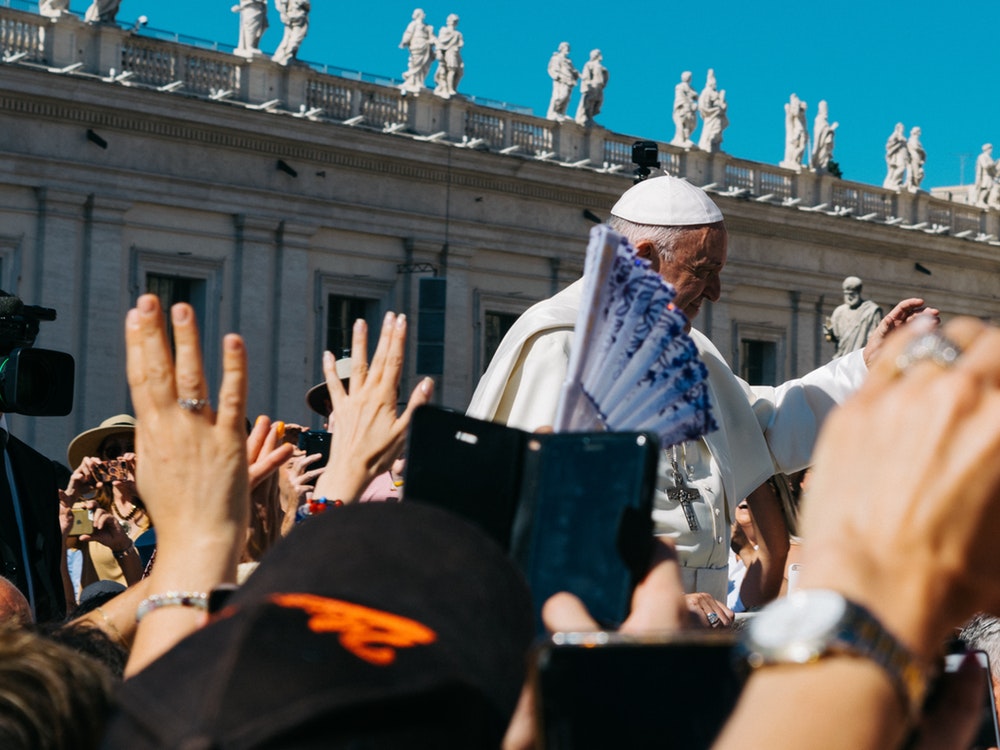
If you’re familiar with the New Testament you know that it does not support the idea of sectarianism as far as the worldwide Church goes, i.e. the body of Christ. You see, you’re either a believer (a genuine Christian) or you’re not. The tag you choose to go by is irrelevant. What’s going on inside you is the important thing, not the sectarian label with which you might identify. I’m not saying it’s wrong to join a particular sect/camp – assuming it honestly tries to be biblical – but it is wrong to arrogantly think that your sect has a patent on truth and is the “one true church,” which smacks of both arrogance and cultism.
Quasi-Christian groups like the Jehovah’s (False) Witnesses and Mormons do this, of course, but so do mainline sects and others. A few years ago a Lutheran minister wrote me and insisted that his denomination was the one true church and all other sects were not pure in doctrine like his camp. He may not have put it in these precise terms, but it was what he actually believed.
The Roman Catholic Church makes a similar claim with the boast that their sect is the only one that can trace its lineage to the 1st century apostles, like Peter, whom they say was the first bishop (“Pope”) of Rome. There’s only one biblical passage that might imply this (1 Peter 5:13), but – whether Peter was or was not the bishop of Rome – there’s zero biblical evidence that this position was to have primacy over the worldwide Church. In other words, the doctrine of the earthly supremacy of the papacy is unscriptural, which is a huge problem when you consider that the Bible is God’s blueprint for authentic Christianity.
In this article we’re going to see that…
- Arguing based on physical lineage is not grounds for legitimacy in Christianity.
- Faithfulness to the God-breathed Scriptures is the true basis for authenticity.
- The Catholic Church – as we know it – didn’t even exist until like the 5th century and the late 4th century at the earliest; and, as such…
- The New Testament Scriptures were not written by the “Catholic Church fathers” nor originally verified by them.
Arguing Based on Physical Lineage Is Not Grounds for Legitimacy in Christianity
Both John the Baptist and Christ utterly shattered the argument of legitimacy based on lineage. Before the Messiah’s consecration to public ministry, John was baptizing people at the Jordan River with a baptism of repentance in preparation for Jesus’ soon-to-come ministry:
But when he saw many of the Pharisees and Sadducees coming to where he was baptizing, he said to them: “You brood of vipers! Who warned you to flee from the coming wrath? 8 Produce fruit in keeping with repentance. 9 And do not think you can say to yourselves, ‘We have Abraham as our father.’ I tell you that out of these stones God can raise up children for Abraham. 10 The ax is already at the root of the trees, and every tree that does not produce good fruit will be cut down and thrown into the fire.
Matthew 3:7-10
John knew beforehand that these partisan religionists were going to argue for their legitimacy based on their hereditary connection to Abraham, but John shot this idea down in flames before they even had the audacity to voice it.
After Christ entered into public ministry, the issue of fatherhood came up in a discussion with the Pharisees and other Hebrews. They asked who Jesus’ father was and he answered:
“You do not know me or my Father,” Jesus replied. “If you knew me, you would know my Father also.”
John 8:19
They then proceeded to argue their legitimacy based on being children of Abraham and children of God:
39 “Abraham is our father,” they answered.
“If you were Abraham’s children,” said Jesus, “then you would do what Abraham did. 40 As it is, you are looking for a way to kill me, a man who has told you the truth that I heard from God. Abraham did not do such things. 41 You are doing the works of your own father.”
“We are not illegitimate children,” they protested. “The only Father we have is God himself.”
42 Jesus said to them, “If God were your Father, you would love me, for I have come here from God. I have not come on my own; God sent me. 43 Why is my language not clear to you? Because you are unable to hear what I say. 44 You belong to your father, the devil, and you want to carry out your father’s desires. He was a murderer from the beginning, not holding to the truth, for there is no truth in him. When he lies, he speaks his native language, for he is a liar and the father of lies.
John 8:39-44
The fact that these unbelieving Jews could trace their heritage to Abraham was irrelevant. Their attitude, beliefs and actions revealed the truth – the reality – of their spiritual condition, not their physical lineage.
They then shifted their argument from physical to spiritual lineage, insisting that God was their father. So the Messiah frankly told them: “If God were your Father, you would love me, for I have come here from God” (verse 42). Now, keep in mind that Jesus was/is the Living Word of God (John 1:1-3). The Living Word of God – Christ – is always in agreement with the written Word of God (2 Timothy 3:16). Both are called “truth” in the Bible, that is, reality, the way it really is (John 14:6 & 17:17). If God was truly their father they would also love the Word of God, both the Living Word and the written Word. But this clearly wasn’t the case with the Pharisees & their ilk because they hated the Messiah so much they wanted to murder him.
Furthermore, they were seriously in error in their doctrines (teachings), which Jesus stressed when he instructed his disciples:
“Be careful,” Jesus said to them. “Be on your guard against the yeast of the Pharisees and Sadducees.”
Matthew 16:6
The disciples mistakenly took the Lord literally and so Christ clarified:
How is it you don’t understand that I was not talking to you about bread? But be on your guard against the yeast of the Pharisees and Sadducees.” 12 Then they understood that he was not telling them to guard against the yeast used in bread, but against the teaching of the Pharisees and Sadducees.
Matthew 16:11-12
This didn’t mean that the Pharisees and Sadducees were wrong on every point of doctrine, of course, very few false religious groups are wrong about everything. But both of these sects of Judaism were off on enough important points that Christ warned the disciples to guard against their teachings in general. One problem with both groups is that they were perversely legalistic. Furthermore, the Pharisees deviated from Scripture in favor of tradition or philosophizing (Matthew 23:16-22, Mark 7:1–23, & Luke 11:42) while the Sadducees argued that there was no resurrection of the dead and neither angels nor demons (Acts 23:8). Needless to say, each of these flawed mindsets would negatively affect a disciple’s spiritual health.
All of this demolishes the idea of legitimacy based on physical lineage; it also establishes that…
Faithfulness to the God-breathed Scriptures Is the True Basis for Authenticity
Anyone who is of God will love the Living Word – Jesus Christ – who came from the Father, as well as love the written Word because the Living Word and the written Word are in agreement. Both are “truth” (John 14:6 & 17:17). This explains a rule that Paul & Apollos had in their service: “Do not go beyond what is written” (1 Corinthians 4:6) (see this article for details).
This wise principle corresponds to something Jesus stressed:
Then Jesus said to the Jews who had believed in him, “If you continue in my word, you are truly my disciples; 32 and you will know the truth, and the truth will make you free.”
John 8:31-32 (NRSV)
Knowing the truth – that is, reality, the way it really is – is dependent upon devotion to God’s Word and “continuing” in it (which means not giving up after a season and not settling into an arrogant know-it-all rut). This explains why the noble Bereans went directly to the Scriptures to verify if Paul’s message was true or not (Acts 17:10-12). They didn’t go to their sect’s doctrinal hand-scroll, but to the God-breathed Scriptures. They understood that the Scriptures are the LORD’s blueprint for authentic Christianity.*
* You can read more about the noble Berean spirit here.
By contrast, those who go beyond God’s Word will not know the truth and therefore will not be set free by it. Such people will find themselves in bondage in one form or another, including religious bondage. This is always the case with those who go beyond what is written and add this or that to the Holy Scriptures, which is blatantly denounced in God’s word (Deuteronomy 4:2, Proverbs 30:6 & Revelation 22:18-19). It’s something the Pharisees regularly did.
If you want clear proof that the Scriptures are God’s established pattern for authentic Christianity look no further than this passage where Paul instructs his protégé Timothy:
and how from infancy you have known the Holy Scriptures, which are able to make you wise for salvation through faith in Christ Jesus. 16 All Scripture is God-breathed and is useful for teaching, rebuking, correcting and training in righteousness, 17 so that the servant of God may be thoroughly equipped for every good work.
2 Timothy 3:15-17
According to this text, what is it that that’s going to make Timothy — and, by extension, any believer — wise? The Holy Scriptures! It goes on to explain why this is so: Because “all Scripture is God-breathed,” which simply means that the writers whom the LORD chose to chronicle Scripture “spoke from God as they were carried along by the Holy Spirit” (2 Peter 1:21). As such, Scripture is “useful” for several things: “teaching, rebuking, correcting and training in righteousness.” It’s through the rightly divided instruction of Scripture and the corrections & training thereof that we are “thoroughly equipped for every good work.”
Of course we understand that the Holy Spirit within the believer helps in accomplishing this (John 16:13 & 1 John 2:27). But notice that nothing is said about an infallible pope or an elaborate religious hierarchy being necessary to make you wise through teaching you, correcting you and training you. Yes, fivefold ministers (that is, apostles, prophets, evangelists, pastors & teachers) are instrumental in the healthy spiritual growth of disciples (Ephesians 4:11-13), but only according to their Spirit-led faithfulness to the God-breathed Scriptures in their loving teachings, exhortations, corrections and example!
Anyone who deviates from the God-breathed Scriptures by either adding unbiblical doctrines & practices or omitting vital material is not a genuine man or woman of God, no matter how authentic they claim to be. Whether or not their lineage can be traced back to the 1st century Church is irrelevant. This applies to groups as well. If a sect boasts of being the “one true Church,” but their doctrines & practices are grossly unbiblical, it tells you everything you need to know — flee for your spiritual welfare! Christ said: “LEAVE THEM; they are blind guides” (Matthew 15:14).
Now let’s relate all of this to our topic, the claim that the Catholic Church is one-and-the-same as Christ’s original Church of the 1st century; in other words, “the one true church.” If the Catholic Church were truly of God then they would love both the Living Word and written Word, which means that they would agree with the Word. Unfortunately, this is simply not so. The Catholic Church has numerous doctrines & practices that don’t comply with God’s Word, to put it mildly; we’ll look at many of them momentarily.
I want to stress here that this does not mean that every person identifying as a “Catholic” is unsaved and damned to everlasting destruction in the lake of fire. As I said before, the sectarian label a person chooses to go by isn’t as important as what’s going on in his/her heart. Does the individual have saving faith or not? Is s/he reconciled to God or not? These are the questions that are important, not the tag s/he goes by. That said, is it wise for a genuine believer to stay in a sect that advocates doctrine & practices that blatantly deviate from Holy Scripture? The obvious answer is “no” because these unbiblical things would eventually have a negative effect on the spiritual growth of the believer. This is different than saying that God couldn’t raise someone up in the midst of Catholicism to confront this sect with their error, like Martin Luther did in the 1500s.
The Catholic Church – as We Know It – Didn’t Even Exist Until Like the 5th Century; and the Mid 4th Century at the Earliest
How can the Catholic Church be the original Church of Christ in the 1st century when it didn’t even exist until almost 400 years later? Let me explain…
The origins of the Roman Catholic Church were forged at the Council of Nicaea in Asia Minor (Turkey) in 325 AD. At this council the dubiously-converted Roman Emperor Constantine, who mixed Christianity with paganism, attempted to unite Christendom because he envisioned Christianity uniting the deteriorating Roman Empire. While some good things came out of this historic council, like upholding the doctrine of Christ’s divinity, it mixed Christianity with politics and the corresponding temptations of power and corruption thereof. Later in that century Christianity became the official state religion of the Roman Empire, which is essentially when Catholicism was born.
The Roman Church fell into increasing error. Christ & the apostles warned of this in the Scriptures (Matthew 7:15-23, Acts 20:28–32, 2 Corinthians 11:13, 2 Peter 2:1 & Jude 1:4). Faithful believers had to operate more and more ‘underground,’ much as they do today in Communistic nations that have their compromised State-approved Christian religion and the invisible underground Church that meets secretly, which is the real Church.
The acceptance of Augustine’s false doctrines in 431 AD at the Council of Ephesus was the prologue to a thousand year dark age wherein all kinds of absurd unbiblical doctrines & practices were embraced by the Roman Church and accumulated. These amassing corruptions are what prompted the great Protestant Reformation in the 1500s.
All the books of what is known as the New Testament were already listed in the Muratorian Canon circa 170 AD, except for Hebrews, James, 1 Peter and 2 Peter, plus the mini-epistles 2 John and 3 John. This was 155 years before the Council of Nicaea.
I realize that the Roman Catholic Church claims it began with Peter, whom they say was the first pope — that is, bishop of Rome — but the proof is in the pudding of Scripture, which is God’s established pattern for authentic Christianity. And nowhere in the God-breathed Scriptures will you find support for doctrines & practices like these:
- The papacy, a supreme human leader of Christianity on earth. Actually Christ is the head of the church (Colossians 1:18, 2:10 & 2:19) and fivefold ministers, e.g. pastors and teachers, are under-shepherds who lead in a servant-like fashion (Acts 15:1-23, Galatians 2:1-14, Ephesians 2:19-20, 4:11-13 & 1 Peter 5:1-5).
- Apostolic succession, the idea that the (supposed) supreme earthly authority of the papacy is transferred from pope to pope (ditto).
- Papal infallibility concerning declaration of dogmas (official teachings, aka doctrine), which is easily refuted. It’s the God-breathed Scriptures that are infallible, not a particular human leader in the Church (Isaiah 8:20 & 40:8, John 10:35, Acts 17:10-12, 20:32 & 2 Timothy 3:15-17).
- Equating extrabiblical traditions with the authority of Scripture (Mark 7:8).
- Mary veneration that smacks of worship, as well as the mythology built around Mary centuries after the biblical canon was completed. Whilst Mary was highly favored of God and rightly considered blessed by all generations (Luke 1:28 & 1:48), she’s not to be worshiped, which both the apostles and holy angels utterly rejected (Acts 10:25–26, 14:13–15, Revelation 19:10 & 22:9). Worship is for God Alone. For details go here.
- Praying to dead saints or Mary (Matthew 6:9, Romans 8:26-27, 1 Timothy 2:5, Hebrews 4:16, 7:25). Nowhere in the Bible are we instructed to pray to someone who physically died; in fact, we are commanded not to do this (Leviticus 20:27 & Deuteronomy 18:10-13). Nowhere does the Bible suggest that believers who have passed away are praying for people on earth. This article details the believer’s intermediate state in heaven and the activities thereof. Only the omnipotent, omniscient LORD can hear all the millions of prayers on earth and address them accordingly and adequately.
- Obsession with religious statues in worship — which smacks of idolatry — even though the Bible forbids the use of images in worship (Exodus 20:4–5). Interestingly, the Catholic Church summarizes the second of the Ten Commandments as “you shall not have other gods beside me,” but they outrageously omit “you shall not make for yourself a carved image” and “you shall not bow down to them or serve them.” Why? Obviously because the Catholic Church has a long history of borderline idolatry with its use of statues and iconography in worship, so they just cut out the part of the Scripture passage they didn’t like!
- Confession to priests. Actually all believers are priests of God (1 Peter 2:5-9, Revelation 1:6 & 5:10) and we are to confess directly to the LORD (1 John 1:8-9 & Hebrews 4:16) and other believers as led of the Spirit, particularly those we’ve offended (James 5:16). Of course you have to be wise in the latter because false believers or carnal believers will use negative data against you, e.g. gossip/slander.
- Infant baptism, which isn’t taught anywhere in the New Testament because a person has to willingly choose Christ (Romans 10:9-13) and, of course, infants are incapable of doing this.
- Celibacy mandated for Church leaders (1 Timothy 3:2).
- The damaging false doctrine Amillennialism, which teaches that there will be no millennial reign of Christ (Revelation 20:1-7) and — ludicrously — that we are now simultaneously in the Church Age, the Tribulation and the Millennium.
- Transubstantiation, the curious claim that the bread & wine at the Lord’s Supper celebration literally morphs into the body and blood of Christ.
- The absurd granting of indulgences, which amounts to earned forgiveness. Indulgences were aggressively marketed & sold prior to the Reformation to fund the rebuilding of St. Peter’s Basilica in Vatican City, Rome. To Reformers, it smacked of the sale/purchase of salvation or the forgiveness of sins. Indulgences are still practiced to this day in various ways, e.g. plenary indulgences granted to Catholics who, say, watch a Christmas benediction on TV.
All of these extra-biblical errors were made up as they went along and became “tradition,” which Catholics wrongly consider equal with Scripture.
The doctrine of Purgatory could also be added to this list, at least as far as the idea of purgatory being some kind of middle destiny between eternal life and everlasting destruction, as well as the premise that God assists purifying believers after death in response to the actions of people who are alive on earth. Both of these concepts are unbiblical and therefore the doctrine of Purgatory — as far as these ideas go — is a false doctrine. Yet, to be fair, there are some elements of the doctrine of purgatory that actually relate to the biblical doctrine of the Judgment Seat of Christ. In short, concocting the doctrine of purgatory was unnecessary because we already had the scriptural doctrine of the Judgment Seat of Christ. See this article for details.
Christendom tends to give Catholicism a pass on these unbiblical items because the Roman Church is so huge and goes back to the approximate time of Augustine, but imagine if any non-Catholic group adopted these kinds of doctrines/practices today; it would be scandalous because they’re so outrageously unscriptural.
These blatant problems with Catholicism shouldn’t be interpreted to mean that someone who identifies as a Catholic cannot be a genuine believer. I’ve met several Catholics over the decades who struck me as sincere believers. God is not interested in the tag people go by, but with what’s going on in their hearts. For instance, if you put a label of corn on a can of beans, it wouldn’t make the beans a can of corn.
That said, the LORD is concerned about what people believe because belief corresponds to faith, which determines their salvation and spiritual growth, depending on the specific data the person believes, whether it’s true or false, scriptural or unscriptural. Obviously if what a Christian believes is unbiblical, it will naturally have a negative impact on his/her relationship with God and spiritual growth. This is why the above twelve issues with Catholicism (and more) need to be exposed and purged from a Christian’s belief system, whatever label s/he goes by. This is why I’m exposing them here, not to be mean to Catholics.
The New Testament Scriptures Were Not Written By the “Catholic Church Fathers” Nor Originally Verified by Them
Since the Roman Catholic Church — as we know it — didn’t even exist until the 5th century, or the mid 4th century at the earliest, the New Testament Scriptures from the 1st century were neither written by Catholics nor authorized by them. For details see this article.
Meeting at God’s Blueprint for Christianity
All Christians — whatever sectarian tag they choose to go by — have to honestly meet at the blueprint for Christianity — God’s Word (2 Timothy 3:16) — and what it clearly & consistently teaches from a New Covenant perspective based on sound hermeneutics.
Physical lineage is of no consequence in the body of Christ (Galatians 3:28); it’s spiritual lineage that matters (Galatians 5:6 & 6:15). And anyone spiritually regenerated by the Holy Spirit thru Jesus Christ can trace their lineal descent to the 1st century Church because those early believers were born-again of the same Spirit thru the same Lord (John 3:3,6 & Titus 3:5).
Related Topics:
Does Matthew 16:18-19 Support the Idea of a Pope?
Who Wrote the New Testament Books? Who Authorized them as Scripture Canon?
Why DIDN’T Catholics Want People Having Access to Scripture?
Legalism — Understanding its Many Forms
Sectarianism — What is It? What’s Wrong with It?
Religion and Christianity — What’s the Difference?
Godliness and Religion—What’s the Difference?
What’s the Bible say about Mary and Mary Veneration?
The FALL OF MAN (Humanity) and Slavery to Satan

Incredibly, the Bible teaches that unredeemed humanity is in slavery to satan. In this article we’re going to look at what this means, how it happened, and what are its ramifications. The good news—the awesome news—is that God has ingeniously provided a way of escape for anyone who wants it, which you can read about here.
So what is the evidence that humanity is in slavery to Satan? Let’s start with John 8 where we observe Christ having a discussion with the Pharisees and likeminded Jews. The Pharisees were the staunchly legalistic religious leaders of Israel at the time. While they were respected conservatives, Jesus frankly told them that they were slaves to sin, which they adamantly denied on the grounds of their Hebrew stock (Abraham being their forefather). The Messiah responded that, if they were truly Abraham’s offspring, they would walk righteously as Abraham did. And if they were God’s children they would love him—Jesus—since he came from God. Instead, they were trying to murder him. Christ went on to candidly tell them that the reason they wanted to kill him was because they were acting in accordance with their father’s desire. He was talking about the devil, who was a murderer from the beginning (verses 33-44). So Jesus was saying that the devil was their spiritual father.
Of course, no one likes to be called a child of Satan—especially respected religious folk—and so they proceeded to call Jesus names and even attempted to stone him to death. But the Mighty Christ miraculously slipped from their clutches, no doubt assisted by angels (verses 48-59).
The reason I bring this particular occasion up is because Christ was talking to conservative religious people whom he said were slaves to sin and children of the devil. These were people who knew the Scriptures like the backs of their hands. This shows that conservativism and religion cannot set us free from sin and make us children of God.
Notice what the Bible point blank says about humanity’s slavery to the devil:
We know that we [believers] are children of God, and that the whole world is under the control of the evil one.
1 John 5:19
…the devil, or Satan, who leads the whole world astray.
Revelation 12:9
The devil is able to mislead humanity because he’s the legal ruler of this world; the Bible even calls him the “god of this world” (2 Corinthians 4:4). Some translations render this as “the god of this age,” which shows that Satan’s dictatorship is limited to “this present evil age” and is not forever (Galatians 1:4).
Christ testified to humanity’s slavery to Satan when he commissioned Paul “to open [people’s] eyes so that they may turn from darkness to light and from the dominion of Satan to God” (Acts 26:18).
But when and how did Satan become humanity’s slave master? Let’s look at…
The Fall of Humanity
After Satan’s plunge from Heaven he possessed a serpent-with-legs for the purpose of tempting Eve in the Garden of Eden and, through Eve, seduced Adam into outright rebellion against the Almighty. Here’s the account:
Now the serpent was more crafty than any of the wild animals the Lord God had made. He said to the woman, “Did God really say, ‘You must not eat from any tree in the garden’?”
2 The woman said to the serpent, “We may eat fruit from the trees in the garden, 3 but God did say, ‘You must not eat fruit from the tree that is in the middle of the garden, and you must not touch it, or you will die.’”
4 “You will not certainly die,” the serpent said to the woman. 5 “For God knows that when you eat from it your eyes will be opened, and you will be like God, knowing good and evil.”
6 When the woman saw that the fruit of the tree was good for food and pleasing to the eye, and also desirable for gaining wisdom, she took some and ate it. She also gave some to her husband, who was with her, and he ate it. 7 Then the eyes of both of them were opened, and they realized they were naked; so they sewed fig leaves together and made coverings for themselves.
8 Then the man and his wife heard the sound of the Lord God as he was walking in the garden in the cool of the day, and they hid from the Lord God among the trees of the garden.
Genesis 3:1-8
Let’s start our analysis of this pivotal passage by grasping these four points:
- While Satan could have manifested himself in the physical realm like the “sons of God” later did (Genesis 6:1-4) (see this article for details) he obviously wanted to present his temptation to Eve as a harmless creature in order to be successful. This corresponds to something the New Testament says about him—“Satan himself masquerades as an angel of light” (2 Corinthians 11:14). So he possessed a serpent, but this reptile was hardly the slithering serpentine creatures with which we’re familiar. This reptile had legs and it did not have the negative connotation that snakes have had ever since (Genesis 3:14). Remember, after God created the Universe and all living things the entire creation was called “very good” and this would include the serpent (Genesis 1:31). So this was a striking, shining animal. It was as threatening to Eve as the GEICO gecko would be to us.
- Someone mocked this event to me on the grounds that Eve was tempted by “a talking snake.” But A. it wasn’t a snake as we know it, as explained above; and B. Adam & Eve were clearly used to communicating with animals in the Garden of Eden before their fall because Eve wasn’t shocked when the serpent spoke to her. She reacted as if conversing with such an animal was a normal thing. If this sounds strange to you, keep in mind that most of us communicate with animals every day. For instance, my cats let me know when they want something to eat, when they want affection, when they want outdoors and when they want in the house; they even give thanks! They may not speak English, but they certainly talk verbally and bodily; and I understand them. Now imagine how heightened such communion would be before the fall of creation when the world was perfect. Then add the fact that the serpent was said to be the smartest of the animals God made (Genesis 3:1). This is where the serpent is called “crafty” or “clever,” which is translated from the Hebrew word arum (aw-ROOM), which means prudent, shrewd or sensible.
- Eve appears to have been alone with the serpent when she was tempted, but this seems to be contradicted by Genesis 3:6 where it says she gave some of the forbidden fruit to Adam “who was with her,” which he ate. This explains the traditional Judaic position that Adam was present with Eve the whole time and he heard the entire conversation of the temptation. However, saying Adam “was with her” could simply mean that he was with her when she offered him the fruit. According to this scenario, Eve had the discussion with the serpent, believed his lies, partook of the fruit, and then went to Adam—who was likely nearby—and offered him some of it once he “was with her.” This interpretation helps make sense of the New Testament’s point that Eve was deceived by the devil while Adam was not; and death came to humankind through Adam’s sin rather than Eve’s (1 Timothy 2:13-14 & Romans 5:14-21). Satan obviously knew that Adam would be more open to embracing his deception if it came via the fairer sex. In other words, he knew that women were men’s weakness.
- Eve’s actions could perhaps be excused on the grounds that she was deceived by the serpent. Not to mention she was clearly confused in light of her embellishing of God’s prohibition against eating from the tree of the knowledge of good and evil wherein she added “and you must not touch it” (verse 3). God never said this and it reveals Eve’s muddled mental state. For Adam, however, there was no such excuse: He willfully opted to go with Eve, his “hot babe,” rather than continue with God. It was a clear-minded decision. Simply put, he rejected the LORD and chose the way of the “ancient serpent” (Revelation 12:9 & 20:2).
Now let’s consider the bigger picture from Satan’s perspective: After his humiliating expulsion from Heaven he & his minions were utterly defeated and devastated, living meaningless lives separate from God in the “dark heavenlies.” So the purpose of the devil’s diabolic enticement of Adam & Eve was fourfold:
- To get back at God somehow.
- To ruin the only beings created in God’s image destined to be co-heirs with Christ, of whom he was furiously envious. This ruin would, of course, extend to their descendants and therefore all humanity.
- To usurp the authority and power that Adam & Eve had over the Earth and Universe. As such, Satan would attain lawful control of God’s physical creation.
- Perhaps the most important reason was to possibly win an acquittal with the LORD, which is explored here. This no doubt is Satan’s ultimate goal.
As far as usurping the authority of our primeval parents goes, what power did Adam & Eve possess that Satan craved? God originally blessed the primordial couple — and, by extension, all humankind — to “be fruitful and multiply,” to “subdue” and “have dominion” over all the Earth:
Then God blessed them, and God said to them, “Be fruitful and multiply; fill the earth and subdue it; have dominion over the fish of the sea, over the birds of the air, and over every living thing that moves on the earth.”
Genesis 1:28 (NKJV)
This blessing was equally a directive, showing that the LORD put humanity in charge of the Earth and its animal inhabitants. No stipulations were given on how to govern except that they were not to eat of the tree of the knowledge of good and evil (Genesis 2:15-17). In short, Adam & Eve had power-of-attorney to manage physical creation in God’s place. The Creator obviously trusted them because they were created in His likeness and they didn’t have a sin nature (Genesis 1:27).
Power mad, Satan craved this authority and so masqueraded as a harmless creature in order to, first, deceive Eve and, second, convince Adam through her to make a ruinous decision for them and all humanity, which was in their loins.
Satan’s “Power of Suggestion”
Did you notice, by the way, that Satan’s strategy in duping Eve was simply the “power of suggestion”? He didn’t approach her with a blatant denial of God’s Word, which would’ve shocked her and sent her running. Instead, he worked with her natural curiosity. He knew Eve was already curious about the forbidden fruit and so he waited until she “just happened” to be in the area of the tree before conveying his suggestion: “Did God really say, ‘You must not eat from any tree in the garden’?” The question was designed to get her focused on the sole thing restricted to her & Adam and thus to doubt God’s goodness. The Enemy insinuated doubt concerning God’s will — His Word — to mislead her to the supposed true interpretation, which was a lie. And she believed it because of the innocuous way Satan approached her, masquerading as a harmless, beautiful creature, which she received as a credible messenger due to the devil’s cunning.
Beware: The kingdom of darkness will use these same tactics today to mislead you away from God and His will. In order for the Enemy to not outwit you, you must be aware of his schemes (2 Corinthians 2:11).
The Consequences of Sin
The consequence of eating the forbidden fruit was death. God warned Adam “when you eat of it you will surely die” (Genesis 2:17). The original text contains the Hebrew word for ‘death’ twice and so it should be rendered “in dying you will die.” * In other words, Adam & Eve would die spiritually when they transgressed, which would eventually lead to physically death and, ultimately, eternal death, unless they were redeemed at some point. As such, they lost their eternal life.
* See Young’s Literal Translation.
The condition of spiritual death, by the way, does not mean that the human spirit is dead, but rather that it’s dead to God because it lacks the eternal life necessary to function properly. In short, spiritual death kills the human capacity to know the Creator. This can be observed in the fact that Adam & Eve hid from the LORD immediately after suffering spiritual death. It robbed humanity of guilt-free access into the presence of God and the precious communion thereof.
Something else devastating happened: Since Adam & Eve willingly believed and obeyed the word of Satan over the Word of God they became slaves to a new master through the acquisition of a sinful nature, which is the satanic nature.
Moreover, they gave their God-given power-of-attorney over to their new spiritual master. In essence, Satan acquired the legal right to govern the Earth & Universe, including the legal control of all people born from Adam’s seed, meaning humanity was now in bondage to the Enemy.
Somehow a lawful transfer of power from Adam to Satan occurred. But why wouldn’t the Sovereign LORD simply take this control back from the devil? Because God is perfectly just and it would be unjust to take away authority that Satan legally obtained. A lawful means of reversing this legal transference would have to be implemented and this is what the gospel of Christ is all about, which is why it’s the “good news.”
All of this explains why the Bible says “the whole world is under the control of the evil one” who “leads the whole world astray” (1 John 5:19 & Revelation 12:9). It’s because Satan possesses legal authority over physical creation. How else would he be able to tempt Christ with the offer of “all the kingdoms of the world” if they weren’t legally his to give? See Matthew 4:8-9.
The English Standard Version translates 1 John 5:19 as “the whole world lies in the power of the evil one.” The word ‘world’ in the Greek refers to the Earth and Universe but, more literally, “an ordered system, like the universe and creation.” In short, the devil is legally in control of physical creation and therefore calls the shots, which is why God’s Word refers to him as “the god of this world” who is able to blind the minds of those who don’t believe (2 Corinthians 4:4). See Chapter 17 and 18 of my ANGELS book for enlightening details on how exactly the kingdom of darkness blinds people’s minds, also available in this article.
The Ramifications of satan’s Rule
The fact that Satan is the god of this world can be observed every day all over the planet—war, crime, disease, suffering, immorality, corruption, injustice, abuse, perversion, slander, lies, etc.
One of the favorite arguments of atheists against the idea of an Almighty Creator is that, if there was an all-righteous God, why does He allow all these horrible things to happen? Why doesn’t He stop it? God’s Word tells us precisely why: An evil spiritual being usurped authority from our primeval parents and he’s been running the show ever since, with the assistance of his filthy underlings.
Thankfully, the LORD in his ingeniousness devised a legal way to take control back from Satan. This transfer of power is already in motion and will culminate with “a new heaven and a new earth, the home of righteousness” (2 Peter 3:13). When this takes place, God’s dwelling will be with the redeemed “and he will dwell with them. They will be his people, and God himself will be with them and be their God. ‘He will wipe every tear from their eyes. There will be no more death’ or mourning or crying or pain, for the old order of things has passed away” (Revelation 21:3-4).
So, for anyone who’s upset about the world being so messed up, the LORD’s on top of it. His awesome plan of redemption for humanity, and all creation, is in motion. In fact, he foreknew we were going to fall and already had a plan of action (Ephesians 1:4-5).
What is this plan and how can people make sure they’re on board? See this article.
Related Topics:
Satan (the Devil) — Liar, Slanderer, Thief, Murderer